

The challenge
Industrial companies lack specialized, full-fledged business management systems that can be implemented quickly. Until now a manufacturer had two usual choices, and each comes at a price.
The first is one of the world's leading standard platforms - SAP, Oracle, Dynamics and others. They are proven solutions in the international market, but they require relatively high investment in licenses and additional costs for adapting the system to the specifics of the manufacturing company's processes. These platforms are designed for a very wide range of industries, so they contain a lot of functionality that a particular company will not need.
The second is assembling the company's digital infrastructure from several solutions based on SaaS architecture - Salesforce, Scoro, Asana and the like. They are quick to implement, can be replaced by alternatives if necessary, and the investment is significantly lower with more flexible payment models. Given the limited scope for customization and integration, however, this approach is unlikely to let a company reap the full benefits of process digitization. Business-critical digital infrastructure built on generic tools also means dependence on the service provider's product development strategy and support that is not always effective or tailored to the user.
| Approach | Advantages | Disadvantages |
|---|---|---|
| Standard platform | Proven solutions in the international market (SAP, Oracle, Dynamics) | High investment in licenses; additional costs for adapting to production processes; a lot of functionality a particular company does not need |
| Set of SaaS tools | Quick to implement and replaceable (Salesforce, Scoro, Asana); significantly lower investment and more flexible payment models | Limited customization and integration, so the benefits of digitization are not fully reaped; dependence on the provider's development strategy and support |
The solution
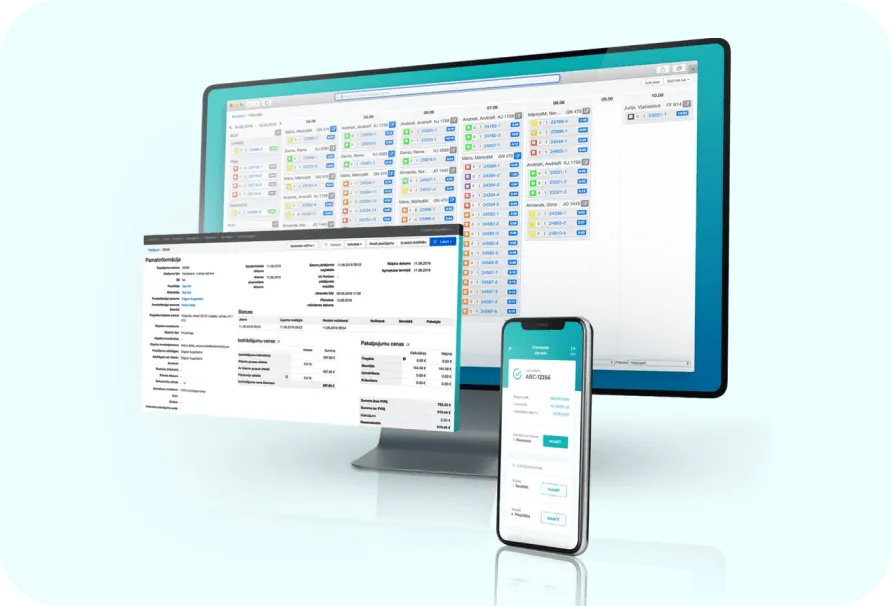
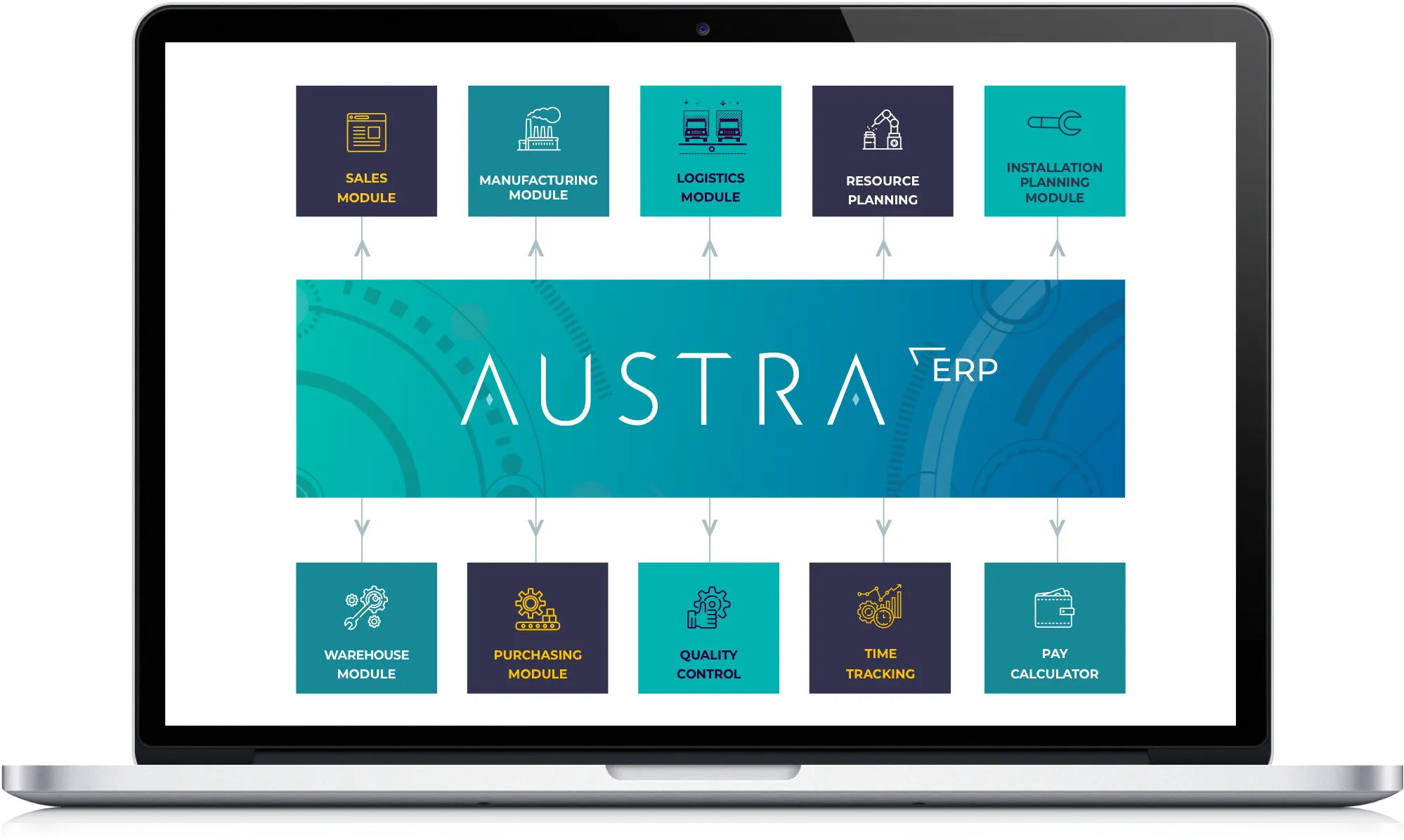
Austra ERP is a platform that combines the advantages of both alternatives while offering a solution to their disadvantages. It is a full-fledged tool that provides digitization and integration of full business cycle processes into a single digital infrastructure. The system consists of functional modules that can be assembled according to business needs: sales and estimation, order management, distributor management, production planning, procurement, logistics, document management, quality management and more.
A platform that combines the advantages of both alternatives while offering a solution to their disadvantages.
Web-based and open to partners
Austra ERP is fully web-based, so company employees can perform and control a significant part of the processes remotely.
The platform gives companies the opportunity to involve cooperation partners in their digital infrastructure - distributors, suppliers, subcontractors and customers. This approach allows companies to significantly increase the speed of information flow in the overall value-added process.
Results
Austra ERP is a web-based system that makes it possible to manage processes remotely, and it is easy to use - there is no unnecessary functionality for user roles. The full range of modules makes it possible to digitize all the most important business processes of the company in a single infrastructure, and the system can be customized according to the company's needs.
Users get continuous and customized support. Cooperation partners - vendors, distributors, suppliers, subcontractors and customers - can be integrated into the process infrastructure. Management gets full-fledged business analytics for decision-making based on objective information.
Presentations to download
Detailed information about the operation and structure of the platform is available in two presentations: the Austra ERP general presentation (PDF) and the Austra ERP technical presentation (PDF). Read how Austra ERP was built in the project story, and find out more about the product itself at austra.io.